Original price was: $125.00.$62.99Current price is: $62.99.
CAS No.: 49557-75-7
Molecular Weight: 340.88 g/mol
GHK complexed with copper is researched for skin remodeling and wound-healing pathways, including support of collagen synthesis and antioxidant/anti-inflammatory activity.
References: https://pmc.ncbi.nlm.nih.gov/articles/PMC6073405/ ;
https://pubmed.ncbi.nlm.nih.gov/18644225/ ;
https://pubmed.ncbi.nlm.nih.gov/35083444/
For research use only. Not for human consumption or veterinary use.
In the 1970s, biochemist Loren Pickart identified GHK-Cu while studying how young plasma could rejuvenate aging human liver cells. This small copper-binding tripeptide soon gained global attention for its role in wound healing, tissue repair, and cellular regeneration research.
Today, researchers recognize GHK-Cu as one of the most studied bioactive peptides in modern science and formulation research. It is available in 50 mg and 100 mg vials for controlled experimental use.
This guide outlines what makes GHK-Cu unique—its structure, biological behavior, research value, and handling guidelines—to help you use it effectively in laboratory or academic settings.
What is GHK-Cu? It is a small tripeptide copper complex found naturally in human plasma. This peptide plays a key role in tissue remodeling and connective tissue formation. Before using it in laboratory or formulation research, it’s important to understand its molecular structure and behavior.
The next sections explain its composition, copper-binding mechanism, and experimental relevance. These details give you the foundation for accurate and reproducible GHK-Cu studies.
GHK-Cu peptides were first identified by biochemist Loren Pickart in the 1970s. He discovered them while studying how young plasma could rejuvenate aging liver cells. [1]
This tripeptide—glycyl-L-histidyl-L-lysine—binds with copper ions to form a stable complex. It is involved in tissue repair, antioxidant defense, and cell growth.
GHK-Cu occurs naturally in human serum, plasma, saliva, and urine. It influences gene expression and is investigated for its effects on skin regeneration in research models.
Compared with other copper peptides, it shows stronger collagen synthesis activity and broader biological interaction. These features make it highly valuable in peptide and skin research studies.
GHK-Cu is a stable topical tripeptide copper complex composed of glycine, histidine, and lysine bound to a copper(II) ion (Cu²⁺). This small molecule forms a stable complex with a copper(II) ion (Cu²⁺), [2] which contributes to its high affinity for biological tissues and its importance in biochemical and molecular research. Below are the verified molecular details of GHK-Cu:
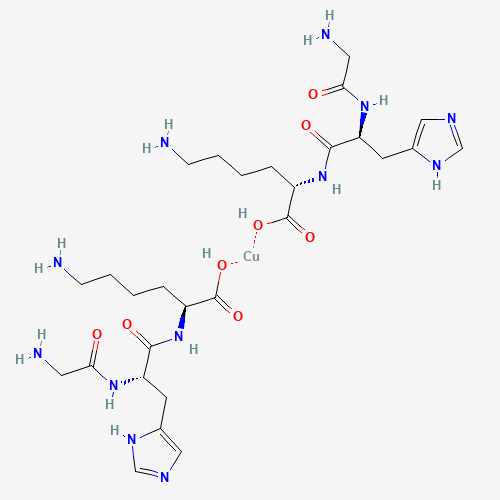
Compared with other copper peptides, GHK-Cu shows stronger collagen synthesis activity and broader biological interaction. Because of this, it remains highly valuable in peptide and skin research, including topical and facial cream formulation research.
GHK-Cu is usually supplied in a freeze-dried (lyophilized) powder form. This process helps preserve its stability and purity during storage and shipping. In this state, it appears as a light blue crystalline solid because of its copper content.
The copper is essential for facilitating copper uptake in biochemical reactions. Lyophilization removes moisture, which helps maintain peptide integrity over time.
Before use, reconstitute the powder with sterile water or buffer to create accurate working solutions. Store GHK-Cu in a cool, dry place and keep it away from light. Avoid repeated freeze-thaw cycles, as they can reduce peptide quality and experimental reliability.
This product is for research use only and is not approved for human or veterinary use. It is meant for in vitro testing, formulation analysis, and other controlled laboratory studies.
Only licensed professionals should handle or prepare this material. GHK-Cu is not a drug, food, or cosmetic product and must never be misused, misbranded, or mislabeled. Always follow institutional and regulatory guidelines when working with research-grade peptides.
Handle GHK-Cu carefully under sterile laboratory conditions to avoid contamination. Store the lyophilized form at or below –20°C in a dark, dry place. After reconstitution, keep the solution refrigerated and use it soon to maintain stability.
Avoid repeated freeze-thaw cycles because they can reduce peptide quality. Clearly label all containers and seal them tightly after each use. Always wear gloves, protective eyewear, and a lab coat when handling. Dispose of unused or expired material following standard laboratory safety procedures and local regulations.
Extensive studies on GHK-Cu show its role in several biological processes, [3] including close and open wound healing, tissue repair, and gene expression.
Researchers note that this human skin remodeling peptide may activate antioxidant enzymes and influence collagen production. These effects are observed through multiple cellular pathways.
They have also documented GHK-Cu’s influence on cell growth and DNA repair genes. Laboratory studies suggest it may regulate growth factor beta and contribute to connective tissue formation in research contexts.
Ongoing studies continue to examine its molecular mechanisms and scientific relevance across multiple research fields.
Scientific research highlights GHK-Cu as a key component in skin repair and wound healing studies, including diabetic wound healing and diabetic skin ulcers. In laboratory research, it has been observed to promote collagen synthesis, increase skin density, and support tissue remodeling.
In controlled studies, the human tri-peptide GHK-Cu is examined for its potential effects on loose skin and rough skin texture. Researchers also observe its influence on fibroblast activity and its role in supporting extracellular matrix organization. [4] Treated samples often show an enhanced antioxidant response and improved structural stability.
Comparative trials show that GHK-Cu performs well in dermal wound models. These results reinforce its scientific relevance in skin regeneration and formulation testing research.
Laboratory studies suggest that GHK-Cu may play an important role in lung fibroblast activity and respiratory tissue repair. In controlled research, it has been observed to influence gene expression linked to oxidative balance and structural recovery.
Animal and cell-based experiments show that GHK-Cu treatment may help support the regeneration of damaged lung cells. It may also contribute to better oxygen exchange efficiency in research settings. Researchers observed changes in inflammatory markers, particularly in ischemic open wounds that affect respiratory tissues.
These findings support continued investigation into GHK-Cu’s molecular behavior and its relevance to pulmonary cell research under tightly regulated laboratory conditions.
Research on GHK-Cu has examined its role in brain and nerve cell studies at both molecular and cellular levels. Findings suggest that it may affect gene expression related to neuronal repair and antioxidant protection. [5]
In laboratory experiments, GHK-Cu helped reduce oxidative stress in neural cultures exposed to damaging conditions. Researchers also observed improved cell growth under controlled settings. Other studies point to its potential involvement in nerve regeneration and the modulation of signaling proteins that influence neural communication.
While the results are promising, all investigations remain in the research phase. These studies highlight the human tri-peptide GHK-Cu’s growing relevance in neuroscience and cell biology research.
Studies show that the copper peptide GHK-Cu has antimicrobial and protective properties in controlled environments. [6] It interacts with bacterial membranes and affects microbial activity through its copper-binding ability.
Laboratory data also suggest that this copper peptide helps protect tissues by maintaining structural balance. It may also reduce signs of cellular irritation observed in research settings. The GHK peptide shares similar characteristics with two skin remodeling substances known for maintaining tissue integrity.
Its antioxidant and anti-inflammatory actions continue to attract scientific interest. Because of this, GHK-Cu remains a central focus in antimicrobial peptide and cell protection research models.
Extensive research shows that GHK-Cu affects cell growth and gene activity across multiple biological pathways and induces anti-cancer expression in controlled studies. It also regulates DNA repair genes, activates growth factor beta, and influences collagen synthesis in experimental settings.
Studies reveal that GHK-Cu helps regulate oxidative and inflammatory responses by modulating gene networks. [7] In fibroblast and stem cell models, it supports controlled cell proliferation and metabolic stability under laboratory conditions.
These findings show that GHK-Cu functions as a natural modulator in tissue regeneration and gene expression research. They also reinforce its importance in peptide and molecular biology studies.
A Certificate of Analysis (COA) confirms the purity, identity, and quality of GHK-Cu used in research. Each COA lists important data, including peptide sequence verification, molecular weight, and batch identification. Analytical methods such as HPLC and mass spectrometry are used to check accuracy.
When you buy GHK-Cu from reputable sources like Peptides Online, each vial comes with a verified COA. This document helps researchers confirm consistency and compliance before conducting experiments. Reliable testing and transparent reporting build confidence in every study involving this copper tripeptide and other peptide-based materials.
GHK-Cu Peptide (5mg) is intended strictly for laboratory research purposes. It is not approved for human, veterinary, cosmetic, or diagnostic use. This product should be handled and stored only in controlled research environments by qualified professionals following proper safety and compliance protocols. The information provided on this page is for scientific and educational reference only. It should not be interpreted as medical, therapeutic, cosmetic, or legal advice. It is presented to ensure transparency, accuracy, and responsible research use of GHK-Cu Peptide (5mg).